
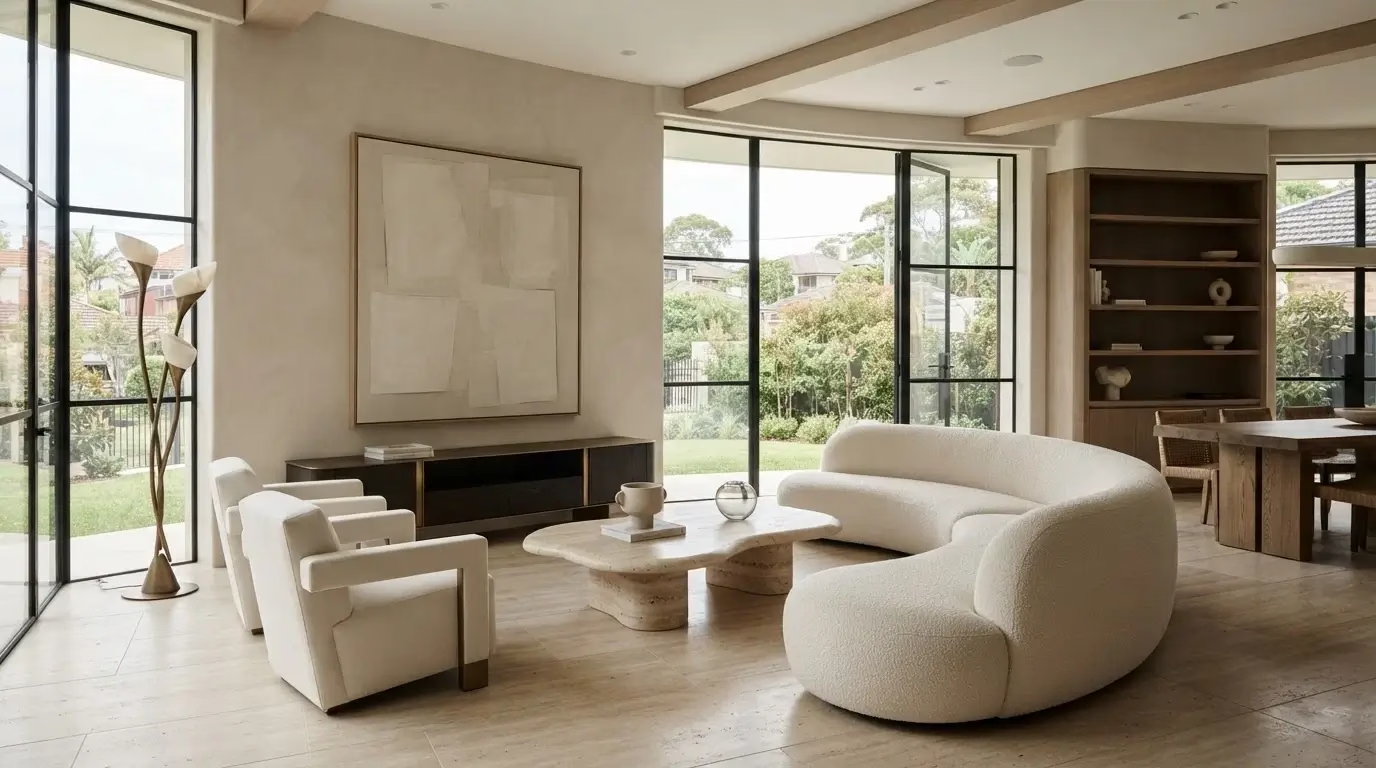
Walk into the right interior designer’s studio, and they’ll ask questions that force you to admit what you haven’t yet decided. Walk in without answers, and you’ll spend several rounds of revisions circling back to things you should have settled in the first conversation. An interior designer Sydney homeowners choose to work with will spend more time on your project than your builder, your architect, or anyone else who touches the home. That relationship deserves clarity from the start.
The best luxury residential interiors in Sydney start with clients who know what they want to change, what they can’t afford to get wrong, and what they’re willing to trust someone else to decide. If you haven’t answered those questions yet, you’re not ready to brief a designer, you’re ready to work out what the brief should be.
Key Takeaways
- Settle your budget and timeline before meeting designers, revising either mid-project adds cost and delays
- Identify which rooms matter most and what you want each space to do, not just how it should look
- Decide upfront whether you want concept design only or full-service delivery including procurement and installation
- Work out what you’re keeping, what you’re replacing, and what you’re open to changing as the design develops
- Choose a designer whose completed work feels like the direction you want, not the aesthetic you’re leaving behind
1. Know What You’re Actually Spending
A budget is the total you can spend on design fees, construction, materials, furniture, lighting, window treatments, art, freight, installation and a contingency for the things you didn’t see coming.
Most people say they have a budget. What they mean is they have a number they’d prefer not to exceed. Those are different things. A budget is the total you can spend on design fees, construction, materials, furniture, lighting, window treatments, art, freight, installation and a contingency for the things you didn’t see coming. If you haven’t separated those categories and assigned real figures to each, you don’t yet have a budget, you have a wish.
Design fees are typically structured as a fixed project fee, an hourly rate, or a percentage of construction and procurement costs, depending on the scope. Luxury projects are scoped individually, so ask each studio to set out its fee structure in writing.
If the number you’re working with doesn’t allow for the level of finish you’re expecting, the designer will tell you that in the first meeting. Better to hear it then than after three rounds of concepts. Work with an accountant or financial adviser if you need help settling on a realistic figure, and confirm what you’re prepared to borrow, liquidate, or defer to stay within it.
2. Decide Which Rooms Matter Most
You cannot do everything at once, and you should not try. Even clients with generous budgets prioritise. The question is whether you do it consciously at the start, or reactively halfway through when the numbers don’t add up.
List every room you want designed. Next to each one, write what you want it to do, not how it should look, but what has to happen in it. A kitchen that hosts dinner parties needs different joinery and bench depth than one used for quick weeknight meals.
A bedroom that doubles as a home office needs task lighting, power, and acoustic separation that a pure sleeping space does not. A living room where you entertain clients requires a different level of finish than a family retreat where the dog sleeps on the sofa.
Once you’ve listed function, rank the rooms by importance. If the budget tightens, you’ll cut from the bottom of that list, not the top. Designers work this way instinctively, they allocate detail, custom elements and expensive materials where they’ll have the most impact. If you haven’t decided where that is, they’ll guess, and you may not agree with the guess.
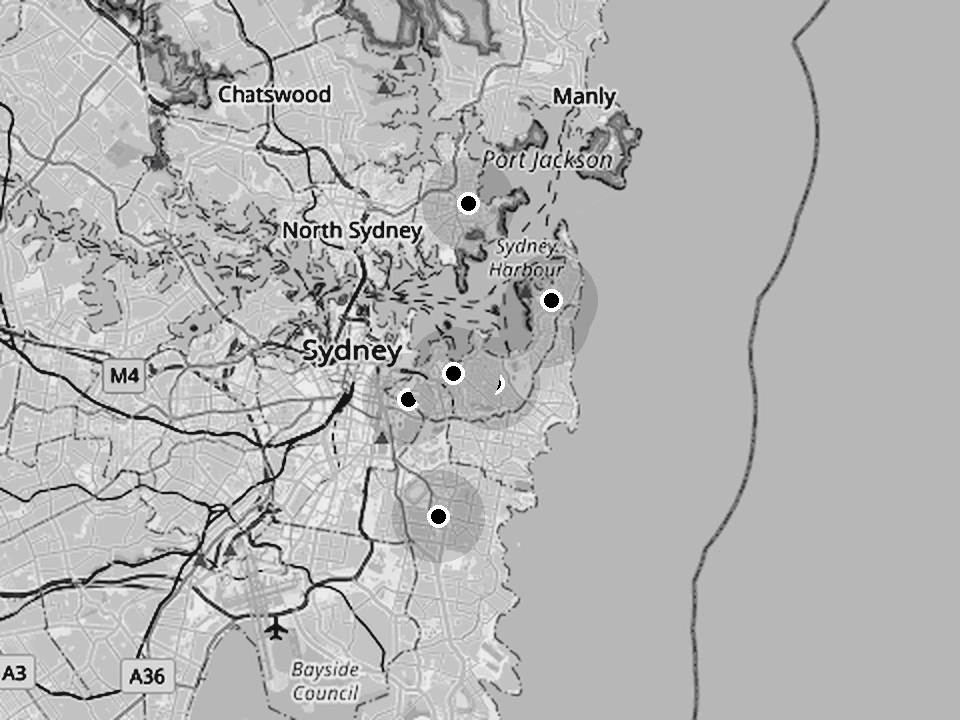
Sydney homes present particular constraints depending on location. Eastern Suburbs terraces and apartments often involve heritage controls, sandstone, narrow lots and limited storage, so clever joinery and concealed services become critical. Harbour and waterfront homes demand careful material selection for marine exposure, plus privacy screening and outdoor integration.
Inner West terraces require custom solutions for tight sites and conservation overlays. North Shore homes on sloping blocks need considered level changes, landscaping and pool access. Tell your designer which constraints matter to your site, and they can design around them rather than discover them mid-documentation.
3. Work Out How Much You Want Managed
Interior design is not one service but a menu, with different firms offering concept design and documentation only, or full-service delivery from brief through to installation.
Interior design is not one service. It’s a menu, and different firms offer different parts of it. Some studios provide concept design and documentation, then hand the project to you or your builder to execute. Others manage the entire process from brief through to installation, handling procurement, trades, deliveries, styling and final touches. The scope you choose determines the fee structure, the timeline, and how much of your own time you’ll spend chasing suppliers, coordinating deliveries, and solving site problems.
Concept-only engagements are faster and less expensive upfront. You receive drawings, specifications, mood boards and product schedules, then arrange everything yourself. That works well if you have the time, the contacts, and the confidence to manage multiple trades and suppliers. It works poorly if you’re interstate, time-poor, or unfamiliar with how finishes perform in real conditions. A wrong tile choice or poorly detailed joinery can be costly to fix.
Full-service design includes procurement, project management, site visits, trade coordination, quality checks and installation. The designer sources everything, manages lead times, handles freight and customs for imported pieces, coordinates deliveries with the builder, and solves problems as they arise. You pay more, but you also avoid the risk of ordering the wrong product, missing a critical delivery window, or discovering too late that the finish you chose doesn’t suit the room’s light or use.
| Service level | What you get | What you manage yourself |
|---|---|---|
| Concept design | Drawings, specifications, schedules, mood boards | All procurement, coordination, installation, styling |
| Design + procurement | Above, plus sourcing and ordering on your behalf | Delivery coordination, site liaison, installation |
| Full-service delivery | Concept through to final styling, all managed | Sign-off on key decisions, attend milestone meetings |
Decide upfront which model suits your project, your availability, and your tolerance for the unexpected. Switching mid-project from concept-only to full-service is possible, but it usually means renegotiating the fee and accepting that the designer is now managing a process they didn’t control from the start.
4. Identify What You’re Keeping and What You’re Not
Every homeowner has furniture, art, or objects they want to keep. Some are worth keeping. Some are not. The designer needs to know which is which before they start drawing, because a room designed around an existing piece looks fundamentally different from one where everything is new.
Walk through your home and divide everything into three lists. The first list is non-negotiable: heirlooms, commissioned pieces, things you will not replace regardless of what the designer recommends. The second list is flexible: you like it, you’d keep it if it works, but you’re open to replacing it if something better fits the design. The third list is everything else, things you’re ready to sell, donate, or discard.
Be honest about condition and scale. A piece you love may not suit the new space, the colour palette, or the level of finish you’re aiming for. Designers are trained to integrate existing elements, but they can’t make a dated sofa look contemporary, and they won’t try. If you’re emotionally attached to something that doesn’t fit the brief, say so. A good designer will find a place for it in a secondary room, or gently explain why it’s holding the design back.
This applies equally to architectural features. If you’re renovating, decide which walls, windows, floors, or joinery you’re keeping. Changing your mind after documentation begins adds cost, delays approvals, and forces redesigns. Structural changes, heritage constraints, and council overlays all affect what you can alter, so check the limits early. For NSW-specific building and planning rules, the NSW Department of Planning and Environment provides general guidance, though the detail varies by local council and individual circumstances.
Interior Designer Sydney Checklist: Choose Work You’d Want to Live With
Choose a designer whose completed work feels like the direction you want, not the aesthetic you’re leaving behind.
This is the decision that most people get wrong. They choose a designer whose portfolio impresses them, whose press coverage is strong, or whose client list reads well. What they don’t ask is whether they’d want to live in any of the homes that designer has actually completed.
Look at finished projects, not concept images. Visit the studio if you can, or ask to see a completed home in person. Photography flattens spaces, hides details, and makes every room look better than it is. A home that photographs beautifully may feel cold, impractical, or uncomfortable to live in. A home that works beautifully may not photograph as dramatically, but it’s the one you’ll be happy in.
Pay attention to materials, detailing, and how spaces are actually used. Do the kitchens have enough storage? Are the living areas flexible or fixed? Do the bathrooms feel like they’d stay beautiful after years of use, or are they designed for the magazine shoot?
Luxury interiors in Sydney often emphasise natural stone, bespoke joinery, custom metalwork, hand-finished plaster, and tailored upholstery, materials that age well and can be maintained. If a designer’s portfolio leans heavily on trend-driven finishes, bold colour, or statement pieces that date quickly, ask yourself whether that suits a long-term investment.
Check whether the designer’s aesthetic is evolving or repeating. Some studios refine one signature style across every project. Others adapt to the client, the site, and the brief. Neither approach is wrong, but you need to know which you’re hiring. If you want a bespoke response to your home, choose a designer whose portfolio shows range. If you want a recognisable look, choose one whose work is consistent.
Finally, trust your instinct about the person, not just the work. You’ll spend months, sometimes years, working with this designer. If the first conversation feels like a pitch, a lecture, or a performance, it won’t improve. The best designers listen more than they talk, ask hard questions, and tell you when your brief needs rethinking. They’re confident enough to push back, humble enough to admit what they don’t know, and skilled enough that you never see the scaffolding behind the finished design.
Why Nina Maya Interiors Works Differently
Nina Maya Interiors is a studio-based practice with a team of architects, draftsmen, designers and project managers, working with artisans and master craftsmen to deliver a beginning-to-end service.
Nina Maya Interiors approaches every project as a bespoke response to the client, the site, and the way the home will actually be used. The studio handles residential and commercial interiors across Sydney, Australia and internationally, working with a team of architects, draftsmen, designers and project managers alongside artisans and master craftsmen. Every interior is tailored from concept through to delivery, with custom furniture, lighting, rugs, stone pieces and architectural joinery designed individually for the project and made to order.
The firm’s work has been featured in Vogue Living, Architectural Digest, Elle Decoration, Belle, and The Local Project, and shortlisted across multiple Australian Interior Design Awards and IDEA Awards. Projects range from coastal retreats to harbour-view residences, with an emphasis on natural materials, unexpected details, and spaces that feel polished but never stiff. If you’re ready to start a conversation about your home, get in touch at Nina Maya Interiors or call directly to discuss your project.
Common Questions About Hiring a Designer in Sydney
Is it worth getting an interior decorator?
It depends on what you’re trying to achieve. If you need help selecting paint, furniture, and styling for an existing space, a decorator can provide that service at a lower cost than a full interior designer.
If you’re renovating, building, or making structural changes, you need an interior designer who can handle space planning, documentation, joinery design, services coordination, and approvals. The two roles overlap, but they’re not interchangeable. For complex or high-value projects, poor design decisions can be expensive to reverse.
What is the seventy-thirty rule in interior design?
The seventy-thirty rule is a proportion guideline suggesting that roughly seventy percent of a room’s palette should be a dominant neutral or base colour, with thirty percent in accent colours or contrasting tones. It’s a starting point for balance, not a strict formula. Luxury interiors often layer multiple neutrals and textures within the seventy percent, then use the thirty percent for art, accessories, or one statement element. The rule helps avoid visual chaos, but good designers know when to break it.
Which company is best for interior design?
There is no single best company, the right designer depends on your project type, budget, aesthetic preferences, and how involved you want to be in the process.
Look for a studio whose completed work feels like the direction you want, whose scope of service matches what you need, and whose principals you trust to make decisions on your behalf. Check their portfolio for projects similar in scale and complexity to yours, ask about their fee structure and what it includes, and confirm they have the team and suppliers in place to deliver on time.
Start With the Right Questions
The difference between a smooth design process and a stressful one usually comes down to what you settled before the first meeting. Budget, priorities, scope, what you’re keeping, and whose work you trust, answer those five questions honestly, and the rest of the process becomes simpler. Avoid them, and you’ll spend the project revisiting decisions you should have made at the start.
Good designers don’t need you to have all the answers, but they do need you to know which questions matter. If you’re not sure where to begin, start by looking at completed projects that feel like the home you want, then work backwards to understand what it took to create them. The clearer you are about what you’re trying to achieve, the better the result will be.
Planning the interiors of your home?
Nina Maya Interiors designs bespoke, high-end interiors across Sydney and Australia. Tell us about your project.
